
Applies to: Google Chrome on Windows, Mac, and Chromebook, current stable channel, with Chrome’s built-in Password Manager enabled.
To stop Chrome from automatically signing you in to sites: open Settings, go to Autofill and passwords > Password Manager > Settings, and turn off Sign in automatically. Chrome will still remember your saved passwords — it just won’t fill and submit the login form for you without a click.
Google Chrome has a built-in password manager that can remember your passwords. It can also automatically log into websites where you have saved your credentials, submitting the form the moment you land on the page.
If you’d rather approve every sign-in yourself — useful on a shared computer, or if you just don’t like pages logging you in before you’ve clicked anything — you can turn this off.
How do I turn off automatic sign-in in Chrome?
- Click the three-dots settings icon.

- Choose Settings from the list.

- Click Autofill and passwords in the left sidebar (this section was previously labeled just “Autofill”).

- Select Password Manager from the list.

- Click the Settings tab (or gear icon) inside Password Manager, then switch Sign in automatically off.
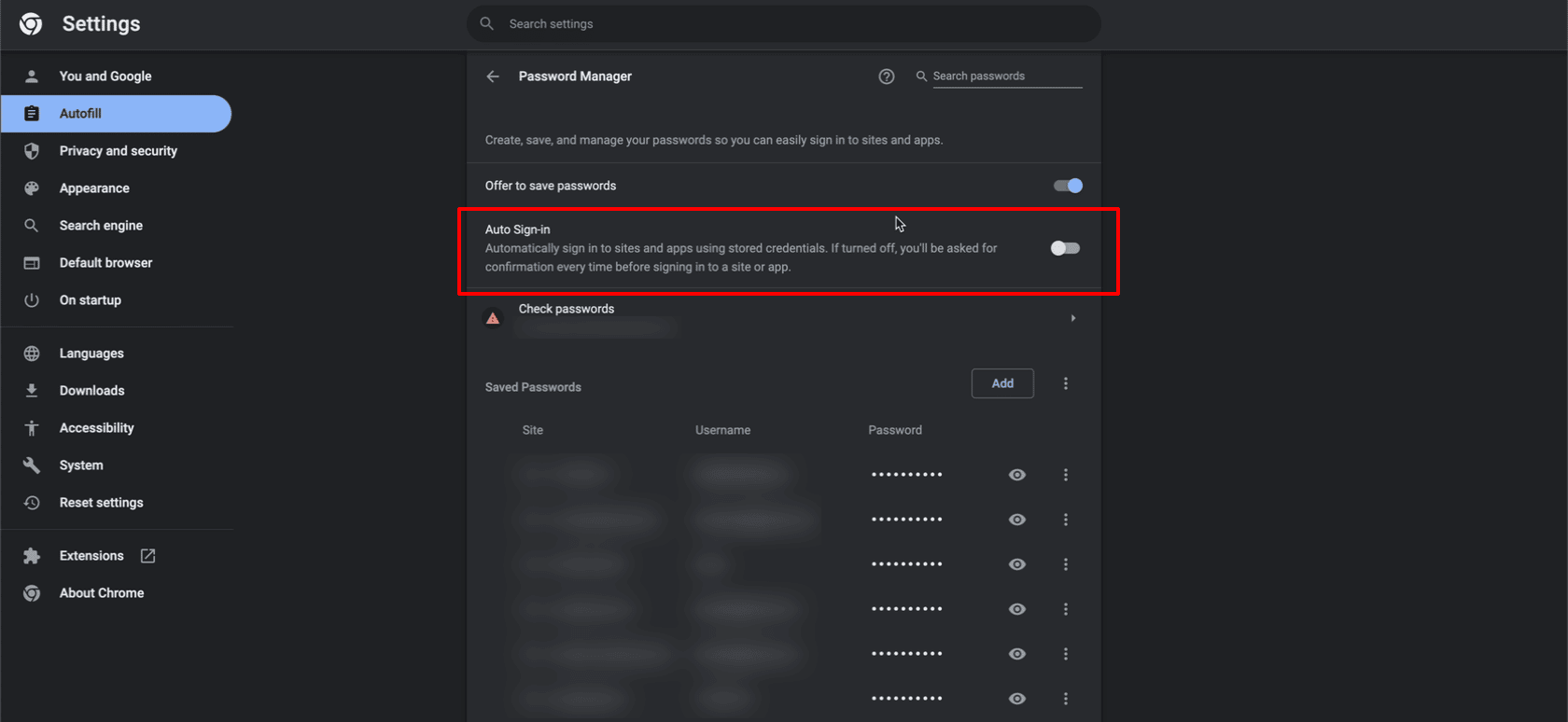
Restart Chrome and test on a site where you’re normally signed in automatically — you should now see a one-click prompt instead of an instant login.
What’s the difference between saving passwords and auto sign-in?
These are two separate settings. Saving passwords just stores your credentials so Chrome can offer to fill them in. Auto sign-in goes a step further and submits the login form for you the instant the page loads, with no click required. Turning off auto sign-in does not delete or stop saving any passwords — it only removes the automatic submission step.
Frequently Asked Questions
Will turning off auto sign-in delete my saved passwords?
No. Your saved passwords stay in Password Manager. You’ll just need to click to confirm sign-in instead of being logged in automatically.
Does this setting sync across my devices?
Yes, if you’re signed in to Chrome with Sync turned on, this setting applies across every device signed in to that Google Account.
Why would I want Chrome to sign me in automatically?
It saves a click on a personal, single-user device. Most people turn it off only on shared or public computers, or simply because they prefer to approve each sign-in themselves.


Leave a Reply